Learn how to feel safe again.
Anxiety is one of the most common reasons people first come to see me, but in many ways it isn’t where the problem begins. Anxiety is usually the end result of a nervous system that has been living with unresolved stress for far too long. “So how did I get here?” you might ask.
Somewhere along the way, your body learned that the world wasn’t completely safe. That lesson may have come through trauma, grief, childhood experiences or a series of events that simply overwhelmed the system’s ability to cope. Long after those experiences have passed, the nervous system can continue responding as though the danger is still present, if the initial cause is not identified and resolved.
This is why anxiety is a perfect illustration of why I work the way I do. For all the times we’re told anxiety is “in our heads”, the people I sit with know better; they feel it in the body, the chest, the stomach, the tight aching muscles, the shallow breath and throughout their entire body. If you’d like the fuller picture of how kinesiology reaches what talking alone often can’t, go to Part Two of this series. This article explores that understanding through the lens of anxiety.
Anxiety is becoming one of the defining experiences in our time. Some people feel it as a constant undercurrent, a background hum that never quite switches off; others are hit by sudden, overwhelming waves of panic and fear. However it arrives, anxiety is a whole-body experience, not only a mental one.
In my practice I often work with people caught in a cycle of overthinking, tension and overwhelm. They’ve talked it through, they’ve tried to relax, and still their system won’t settle. Why?
Because anxiety isn’t only a mindset problem. It’s a nervous-system imbalance — and when talking hasn’t been enough, there’s a reason why.
Understanding anxiety through the body
When we experience stress, the nervous system activates our survival response, releasing hormones such as cortisol and adrenaline. Our heart beats faster, muscles tighten, breathing becomes shallow, digestion slows and every part of the body prepares to protect us.
We often describe this as the fight-or-flight response, but there is another equally important survival strategy: freeze.
When an experience feels too overwhelming to fight or escape, particularly during childhood, the nervous system may shut down instead. The traumatic experience remains unfinished. Although life moves on, the body never fully receives the message that the danger has passed.
Years later, an everyday event may trigger that same protective response. The current situation isn’t really the cause of the anxiety — it simply awakens an old survival pattern that has remained unresolved beneath the surface.
From the perspective of the subconscious mind, this makes perfect sense. The subconscious isn’t primarily concerned with making us happy; its first priority is to keep us alive. When an experience feels too painful or overwhelming to process consciously, it protects us by storing parts of that experience in the subconscious or unconscious mind. The memories may fade, but the protective response often remains, quietly influencing our thoughts, emotions, behaviours and physiology until the nervous system finally feels safe enough to let it go.
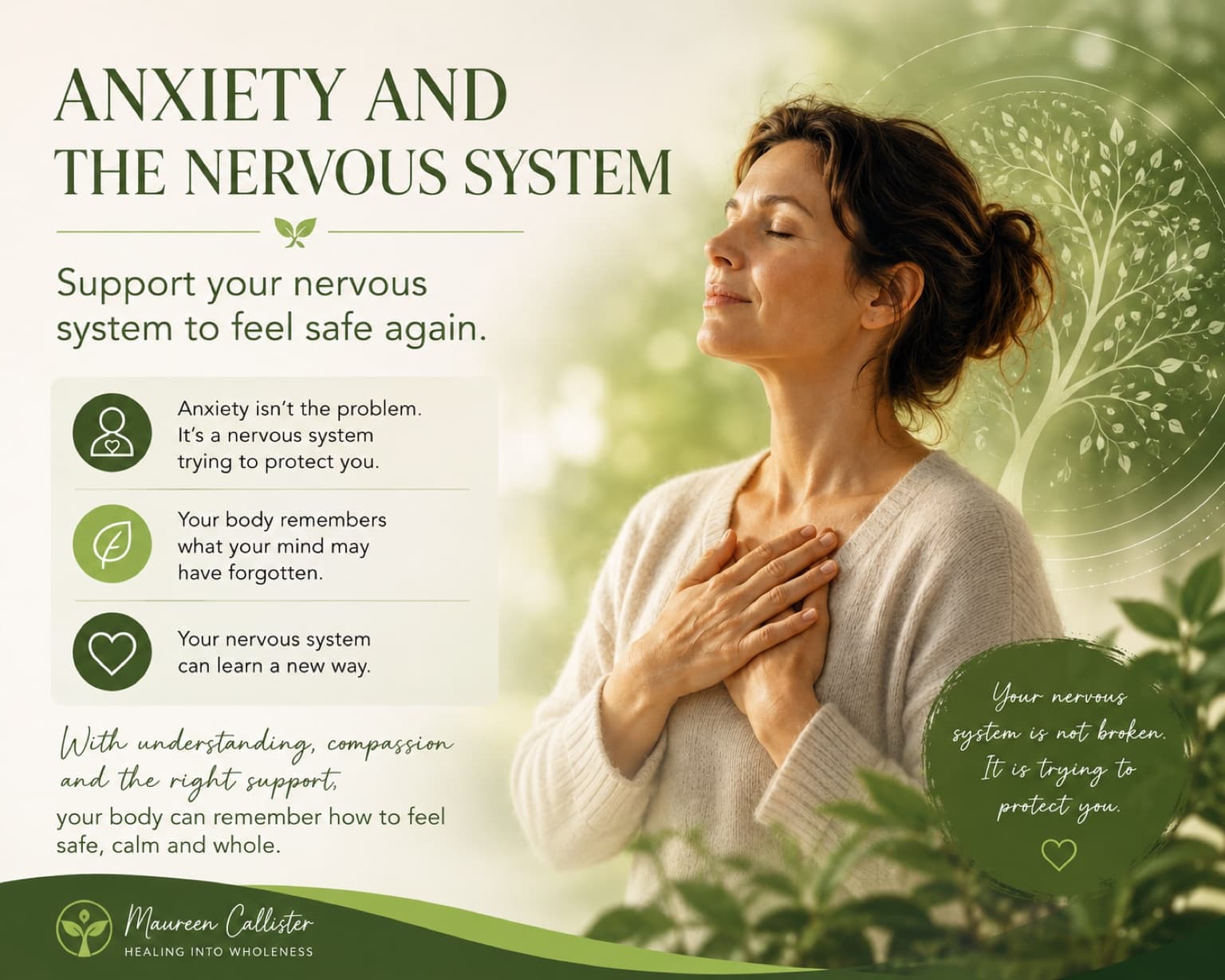
The nervous system isn’t broken. It has simply never stopped protecting you.
Through kinesiology and gentle emotional work, we can begin to unwind these deep patterns, bringing body and mind back into a sense of alignment and safety.
Healing the nervous system: a gentle approach
Kinesiology offers a bridge between the physical body and the emotional layers beneath it. Because the body stores the imprint of every experience, muscle testing allows us to discover not only what is contributing to the current imbalance, but often when an unresolved stress or trauma first occurred.
Rather than looking only at symptoms, kinesiology uses the Triangle of Health; the structural (body), biochemical (body chemistry) and emotional aspects of health, to understand the whole person and the whole picture. Looking at these three areas together gives us a much clearer picture of what the nervous system is trying to communicate and where healing is needed.
In practice, that unfolds along several gentle pathways.
We reconnect the body through the breath.
Shallow, upper-chest breathing is one of the first signs that the nervous system believes danger is present. Gentle diaphragmatic breathing helps activate the parasympathetic nervous system, the body’s natural rest-and-repair response, gradually teaching the brain that the threat has passed.
We gently release stored emotional stress.
Anxiety is often the body’s way of expressing unresolved emotional energy; fear, grief, guilt, shame or loss that has been held beneath conscious awareness. Through kinesiology we can safely identify and begin releasing what the body has been carrying.
We support the body’s natural repair response.
When survival is no longer the priority, the nervous system can shift into its restorative state. Sleep improves. Digestion settles. Muscles soften. Energy begins to return. Rather than forcing the body to change, we simply create the conditions that allow it to do what it has always been designed to do.
We rebuild grounding and inner safety.
One of the most common experiences of anxiety is feeling disconnected from yourself, as though you’re floating outside your body or can never quite land. Through grounding techniques, breath work and nervous system regulation, we help the body rediscover what safety feels like. (There’s a simple grounding practice you can do at home.)
Colour and scent: gentle support between sessions
Healing doesn’t only happen during a session. The small rituals we practise each day can gently remind the nervous system that it is safe, supported and cared for.
To complement the work we do together, I often recommend the Altearah Bio range — beautifully crafted blends of colour and essential oils that support emotional wellbeing through the senses. While they don’t replace the deeper work of resolving stored stress, they can become a simple and nurturing way to help your body return to calm.
Silver, the colour of repair, is one I often suggest during periods of acute anxiety or emotional overwhelm. Many people describe it as feeling like a gentle reset, helping them come back to the present moment and reconnect with a sense of steadiness. The Silver spray is lovely to use during stressful moments or before sleep.
Royal Purple, associated with renewal and energy, can be particularly supportive when anxiety has become exhausting. It encourages grounding, helps restore depleted energy, and offers a beautiful self-care ritual when used as a body oil after a shower or before bed.
Sometimes it isn’t one big intervention that changes the nervous system. It’s the consistent message of safety, offered in many small, compassionate ways.
Your nervous system can learn to feel safe again
Please take comfort and know that your nervous system is not broken. It has simply been doing exactly what it was designed to do – protecting you.
The encouraging news is that the brain and nervous system remain adaptable throughout life. Through a process known as neuroplasticity, they can develop new patterns of regulation and safety, even after years of living in survival mode.
With understanding, compassion and the right support, your body can gradually let go of old survival patterns and remember what it feels like to live with greater calm, confidence and ease.
Often the deepest healing doesn’t come from simply reducing anxiety. It comes from resolving the unresolved experiences that taught the nervous system the world wasn’t safe in the first place. As the body begins to feel safe again, many people also rediscover something else that had been buried beneath the fear — a quiet sense of themselves.
Whether you’ve lived with anxiety for years or are only beginning to recognise it, healing is possible, and you don’t have to navigate that journey alone.
Kinesiology works beautifully alongside other forms of healthcare and emotional support, offering a whole-person approach that considers the body, mind and emotions together. If your anxiety is severe, persistent or significantly affecting your daily life, seeking appropriate medical or psychological support is an important part of your overall care. The best outcomes often come when we work together, each contributing our own area of expertise.